
When to visit Maxwell Falls
Day use only; no camping, fires or shooting. Current conditions
At a glance
- Most water: late May through June, when snowmelt runoff peaks.
- Quietest trails: weekdays in any season, weekday mornings most of all.
- Fall color: late September, on the Cliff Loop.
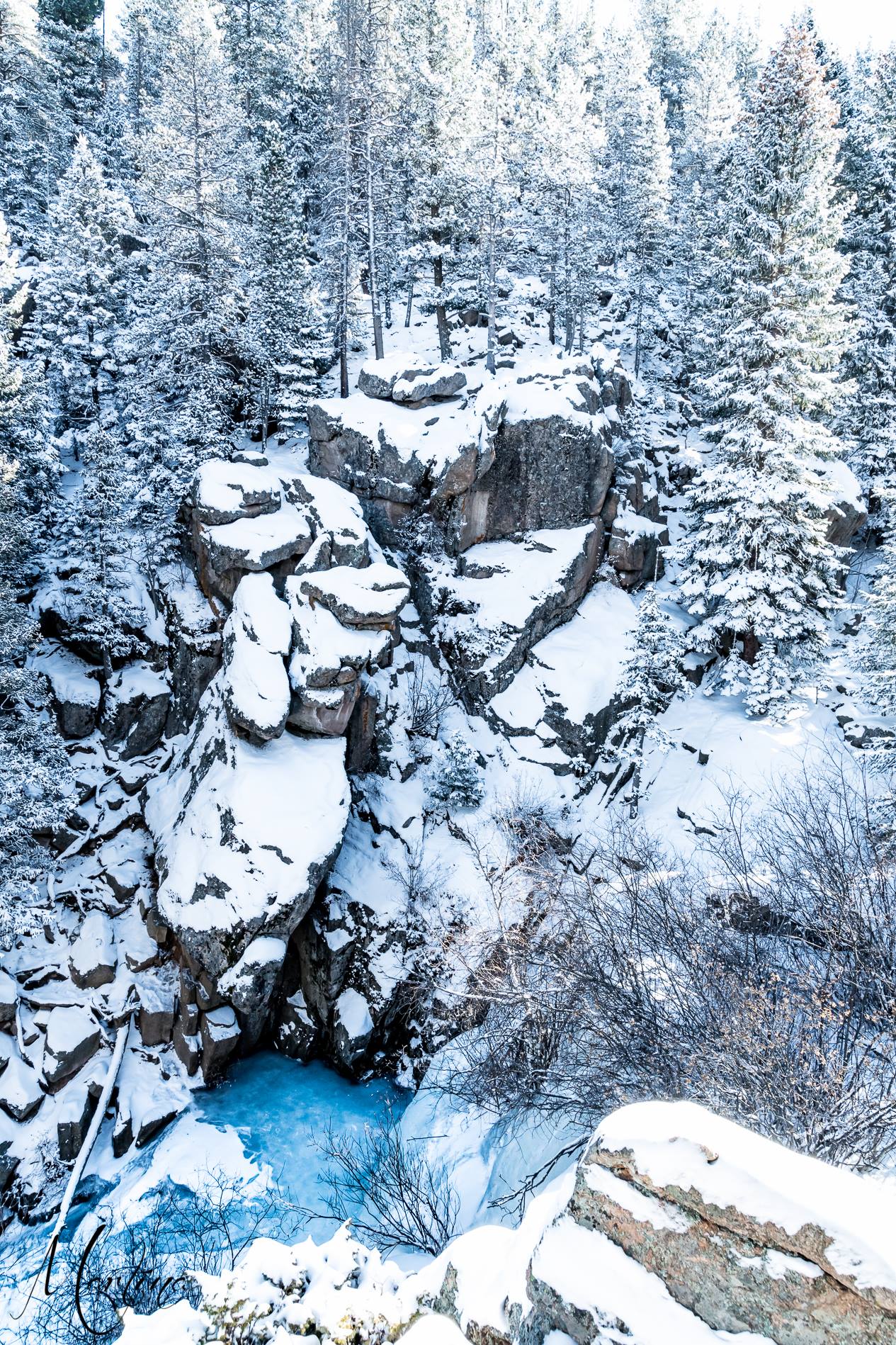
- Ice: January and February, when the falls often freeze. Bring microspikes.
The falls run on snowmelt and rain, so they look very different from one month to the next. After a dry winter they can be down to a trickle by midsummer. The walk is good any time of year, but if you’re coming for the waterfall itself, come in late spring.
Spring (March to May)
Spring is slow to arrive at 8,000 ft. Heavy, wet snowstorms are normal in March and April, and the shaded, north-facing stretches and the area around the falls can hold snow and ice into April or May.
What you’ll see: the creek rising as the snow higher up melts, and the falls getting a little louder every week. The first wildflowers show up too. Pasqueflowers are usually among the earliest, on sunny, open slopes.
What to bring: microspikes for icy patches, waterproof boots for the mud and meltwater, and layers.
Tips: – Spring is when the creek runs coldest and fastest. Keep kids and dogs out of the current near the footbridge and at the falls. – Mud season is rough on trails. Walk straight through the puddles instead of around them, or the trail just gets wider.
Peak flow (late May to June)
If you only come once, come now. The Forest Service says the falls are “at their best in the spring when the snow runoff is plentiful,” and late May through June is when most people see them fullest.
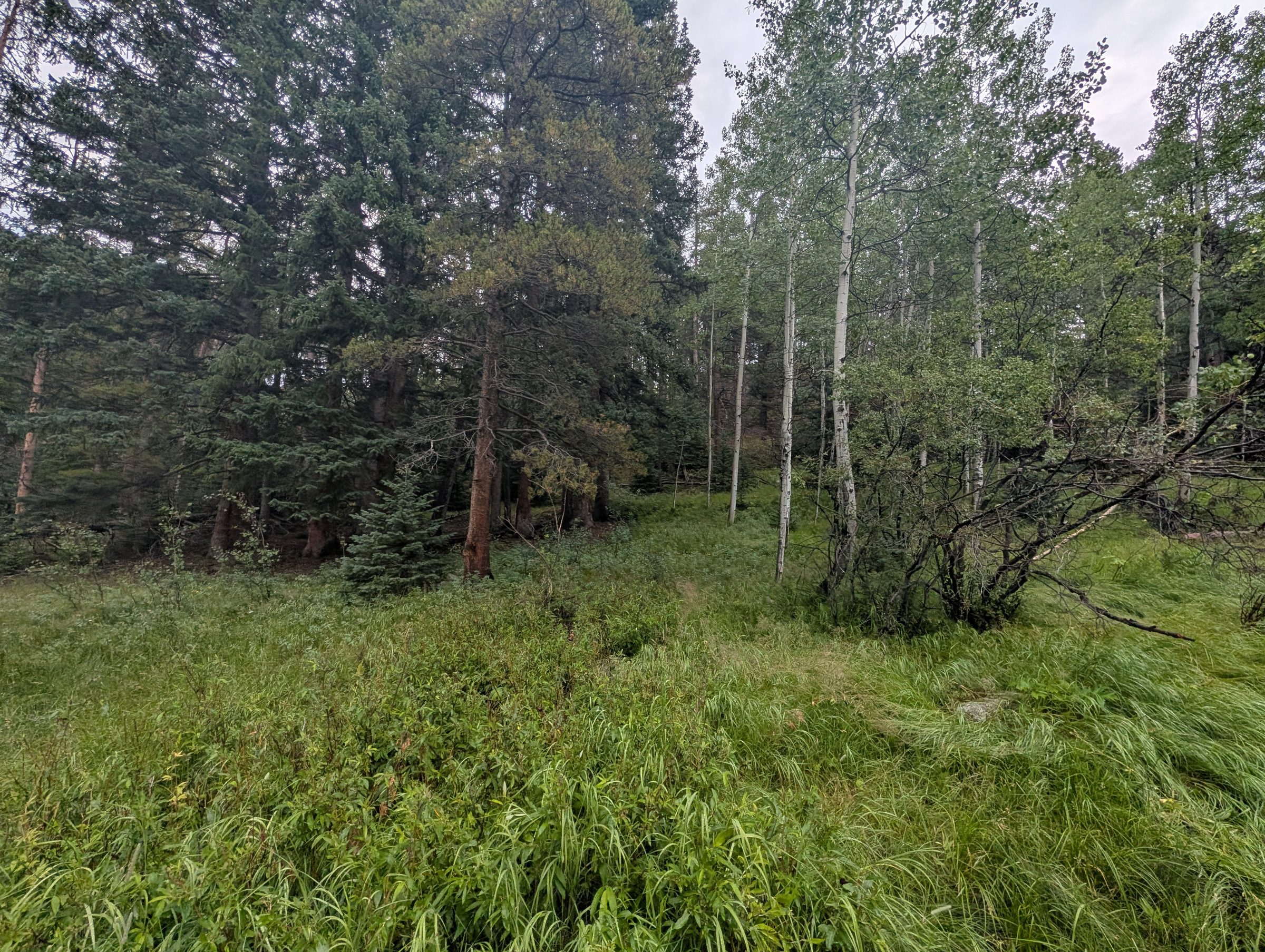
What you’ll see: water pouring over the granite ledges, mist at the base, and a forest that has just turned green. Look along the trail for Colorado blue columbine (the state flower), fairy-slipper orchids in the shade, shooting stars and wild roses.
Photography: go early, before the crowds and before the harsh midday light reaches the canyon floor.
Tips: – Weekend lots fill early. Get there before 8 a.m. or come on a weekday. – The rocks around the falls are wet and slick this time of year. Stay at the bottom and look up.
Summer (July and August)
Summer means warm days, a green forest and the biggest crowds of the year. The flow drops as the weeks go by. By August the falls are often a gentle cascade, and after a dry winter they can be thin.
Afternoon thunderstorms build over the mountains on a lot of summer days, and lightning is a real risk, especially on the exposed rock of the Cliff Loop. Start early and plan to be back at the car by early afternoon. If you hear thunder, head down.
Heat and altitude: dehydration, heat exhaustion and altitude sickness are the usual reasons hikers need help here. There’s no water at either trailhead, so carry enough for everyone, dogs included.
Fire season: fire restrictions are common in summer and fall. The day-use order bans campfires at Maxwell Falls year-round, and under Stage 1 restrictions charcoal grills are out too; a gas or liquid-fuel stove is OK. Check current conditions.
What you’ll see: harebells, wild bergamot, fireweed and penstemons; hummingbirds; and more golden-mantled ground squirrels than you can count.
Bears in late summer: from late summer into fall, black bears go into hyperphagia and feed up to 22 hours a day to put on weight before hibernation. This is when they’re most active. Keep food packed away, pack out every scrap, and keep your dog leashed.
Wildfire smoke
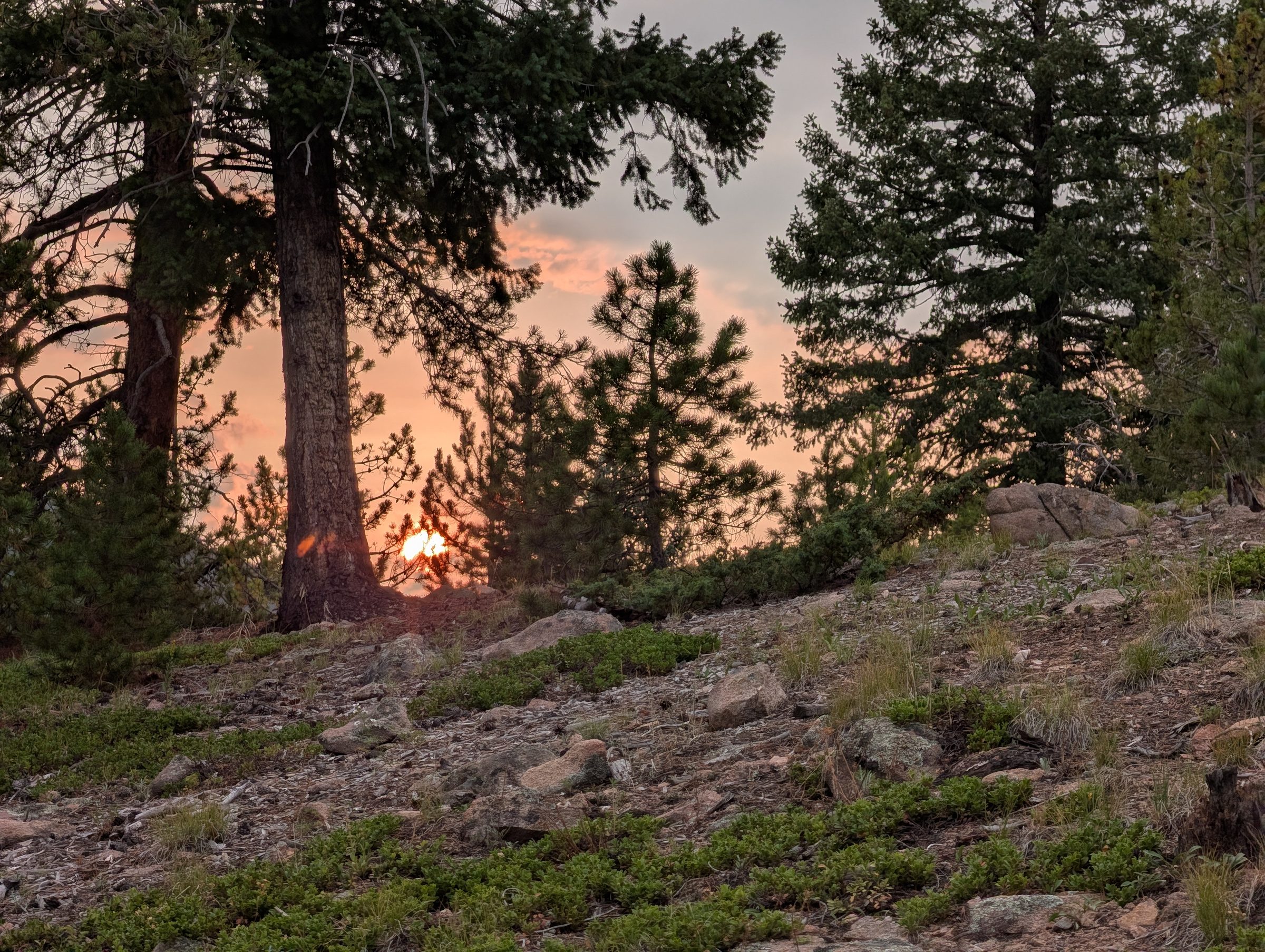
Late in the summer, smoke from fires elsewhere in the West can settle over the Front Range. Sunsets turn red, and the climbs feel harder on your lungs. On smoky days, look up the air quality at AirNow first, and take it easy if you have asthma or a heart or lung condition.
Fall (September to November)
A lot of locals would pick fall. After Labor Day the crowds thin out, the mornings are crisp and the light goes soft.
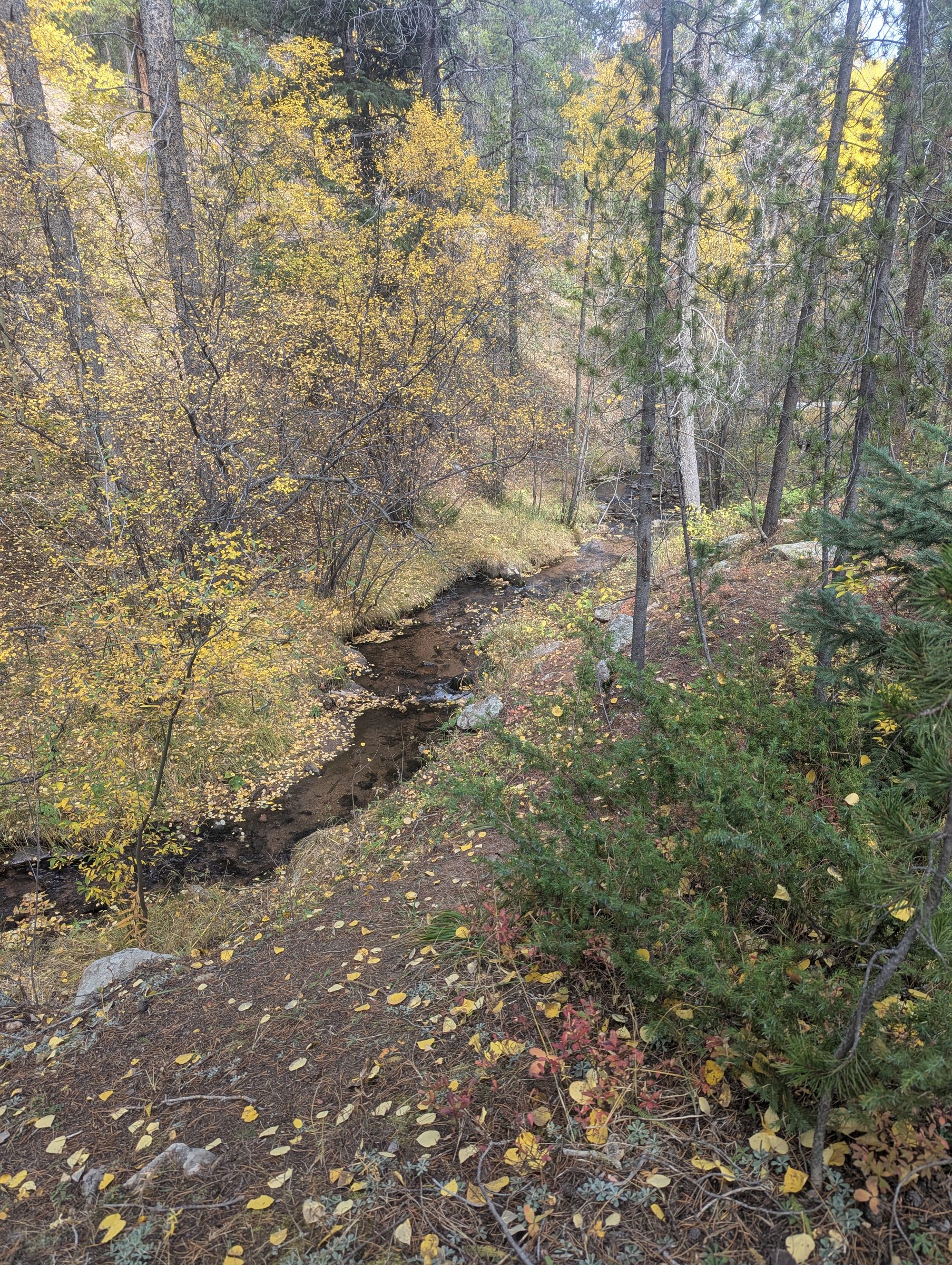
Fall color: the aspens along the Cliff Loop usually turn gold in late September. This is mostly a pine and fir forest, so you get patches of gold against dark green rather than whole hillsides, and it’s still worth the trip.
Water: usually at its lowest. Expect a thin veil or a trickle over the rocks, and come for the walk rather than the waterfall.
Wildlife: bears are still feeding hard, and most Colorado bears stay active until early November (CPW). Moose turn up around Maxwell Falls too; locals know two of them as “Maximus Moosimus” and “Mini Max.” Late August and September is their rut, when the Forest Service’s trailhead notice warns they get more territorial. CPW warns that moose treat dogs like wolves, so give them plenty of room and keep dogs close. Mountain lions follow the deer all year, and neighbors have come across lion kills off-trail. Stay on the trail and keep kids near you (CPW lion tips).
Hunting season: a permanent Forest Service order prohibits recreational shooting here, but licensed hunters hunting legally are exempt. Wear something bright on fall hikes and stay on the trail.
Weather: cold mornings, and the first snow can come any time from October on. Days are short. Under the day-use rule you have to be out by sunset, and sunset comes early down in the canyon.
Winter (December to February)
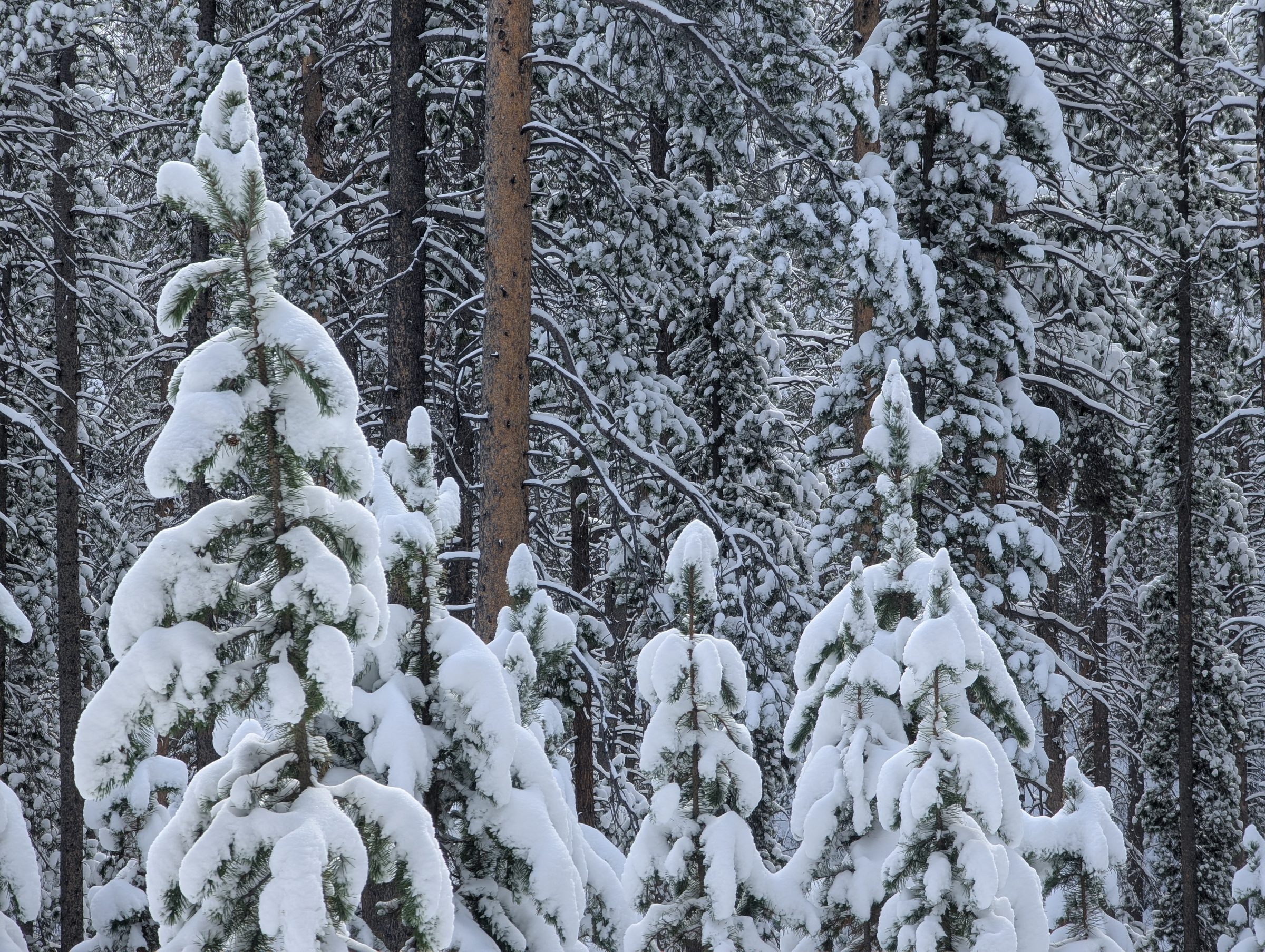
Winter is the quiet season. The falls often freeze into columns and curtains of ice, snow sits on the pines, and on a weekday you might have the place nearly to yourself.
The trail stays open for day use all winter, and the Forest Service lists cross-country skiing and snowshoeing at both trailheads.
What to expect:
- Snow and ice from about December into spring. Packed snow turns to hard ice on the steep sections and around the falls.
- Microspikes are strongly recommended. With them it’s an easy walk; without them it’s a sketchy one. Snowshoes help after a fresh storm.
- The canyon loses the sun early and it gets cold fast. Bring a hat, gloves and a warm layer, and maybe something hot in a thermos.
- Stay off the frozen creek and the ice at the base of the falls. Creek ice can give way, and the water under it is very cold.
Which route in winter? The upper route is short and popular, but you go downhill first, which means descending icy trail before you’ve warmed up. The lower route is longer, with two climbs and two descents each way. With traction, either one is fine. Without it, neither is.
Driving: Brook Forest Road and Black Mountain Drive are mountain roads. After a storm, give yourself extra time and make sure your car can handle snow.
Month by month
| Month | Water | Trail | Crowds | Bring |
|---|---|---|---|---|
| January | Often frozen | Snow and ice | Lighter | Microspikes, warm layers |
| February | Often frozen | Snow and ice | Lighter | Microspikes, warm layers |
| March | Low, starting to rise | Snow, ice, mud | Lighter | Microspikes, waterproof boots |
| April | Rising | Mixed snow, ice, mud | Moderate | Microspikes, layers |
| May | High late in the month | Mostly clear, some mud | Busy weekends | Layers, water |
| June | At or near peak | Clear | Busy weekends | Water, rain jacket |
| July | Dropping | Clear, dusty | Busy weekends | Water, rain jacket, early start |
| August | Low | Clear, dusty | Busy weekends | Water, rain jacket, early start |
| September | Low | Clear | Moderate | Layers |
| October | Low | Clear, first snows possible | Moderate | Layers, traction late in the month |
| November | Low, may freeze | Snow and ice likely | Lighter | Microspikes |
| December | Often freezing | Snow and ice | Lighter | Microspikes, warm layers |
That’s the usual pattern, not a forecast. Snowpack and storms swing a lot from year to year, so check current conditions and the National Weather Service forecast for the falls before you go.
Share your seasonal photos
Got a dated photo of the falls you’d be happy to share with credit? Email us and say when you took it. We post seasonal updates and photos on our Facebook page as well.
When is the best time to see Maxwell Falls?
Late May through June, when snowmelt runoff peaks. By late summer and fall the flow is usually low.
Is Maxwell Falls frozen in winter?
Often, fully or partly, especially in January and February. Stay off the ice at the base of the falls.
Do I need microspikes at Maxwell Falls?
From about December into spring, yes. The steep sections and the area around the falls get icy.
Is Maxwell Falls flowing in the fall?
Usually only a little. The falls are at their lowest, but the walk is a good one, with aspen color on the Cliff Loop in late September.
When are bears most active at Maxwell Falls?
Late summer and early fall, when bears feed heavily before hibernation (CPW). Pack away food, pack out every scrap and keep dogs leashed.
Can I snowshoe or ski to Maxwell Falls?
The Forest Service lists snowshoeing and cross-country skiing at both trailheads. The trail is steep in places, so most people do better with snowshoes or traction than with skis.
Sources
- USFS: Maxwell Falls Lower Trail (“at their best in the spring”)
- USFS: Lower Maxwell Falls Trailhead (winter uses)
- The Virtual Sherpa: Maxwell Falls hike guide (2017)
- Raising Hikers: Frozen waterfall hike with kids near Denver
- Hiking Project: Maxwell Falls Loop (fall aspen color)
- iNaturalist observations near Maxwell Falls
- 5280: Hiking Maxwell Falls (2012)
- National Weather Service point forecast
- Colorado Parks and Wildlife: Living with Bears, Mountain Lions and Moose
- USFS: Permanent Recreational Shooting Order 02-10-00-25-02
- Friends of Maxwell Falls on Facebook